LOWN2OWN
Check Out My Work!
LOAN2OWN - Circular Fashion Platform
Project Snapshot
Project Type: Marketing Strategy, Product Validation, Business Model Development
Timeline: Semester-long collaborative project
Objective: Develop a scalable circular fashion platform that reduces clothing waste while making sustainable fashion more accessible.
Loan2Own is a circular fashion platform concept that allows users to rent clothing through a flexible credit-based system and gradually move toward ownership. The project combines sustainability innovation, consumer research, and marketing strategy to address the environmental impact of fast fashion while maintaining affordability and convenience for modern consumers.
Role
Marketing Strategy & Product Development
Focus
Consumer research, go-to-market strategy, circular fashion model
Outcome
Developed marketing strategy and scalable business concept
Skills Gained & Demonstrated
Marketing Strategy
Consumer Research
Product Validation
- Go-To-Market Planning
- Influencer Marketing
Business Modeling
LOAN2OWN - Marketing Case Study
Project Overview
Loan2Own is a circular fashion platform concept designed to reduce clothing waste while making fashion more affordable and accessible. The platform allows users to rent clothing through a flexible credit-based system and gradually move toward ownership, encouraging longer garment lifecycles and reducing fast-fashion waste. This project was developed as a semester-long collaborative initiative focused on combining sustainable innovation with practical marketing strategy and product development.
My Role
I helped direct the strategic development of the project, contributing to the marketing strategy, business model design, and product validation process. My role involved shaping the go-to-market strategy, analyzing target audience insights, and helping translate research findings into actionable marketing and product decisions. I also collaborated on the development of the investor pitch and strategic positioning of the platform within the rapidly growing circular fashion market.
The Problem
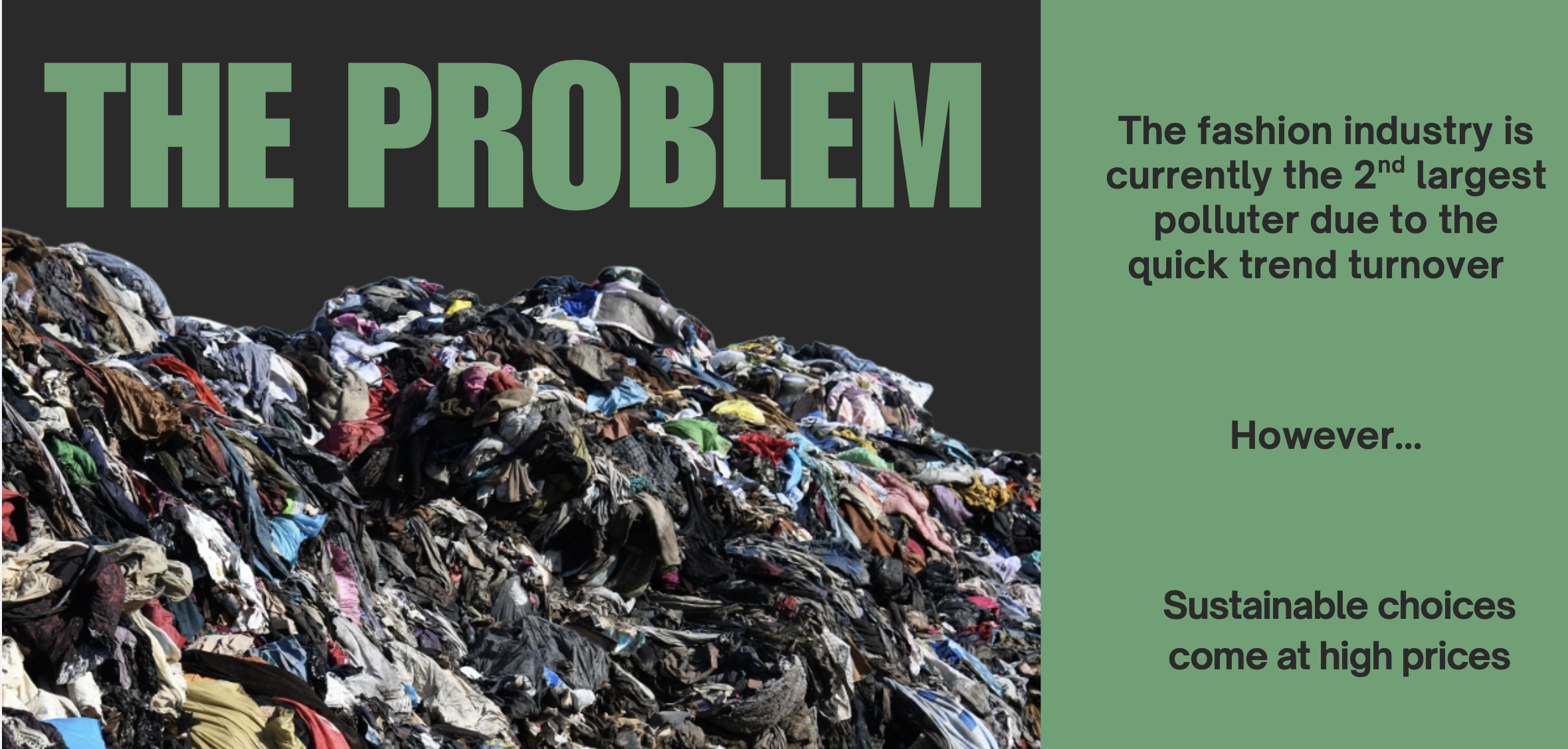
The fashion industry is one of the largest contributors to global waste due to rapid trend cycles and the rise of inexpensive fast fashion. While many consumers express interest in sustainable alternatives, most sustainable clothing options remain expensive or inconvenient compared to traditional retail models. As a result, there is a gap between consumer values and actual purchasing behavior—creating an opportunity for a platform that makes sustainability affordable, convenient, and aligned with modern shopping habits.
Research & Insights
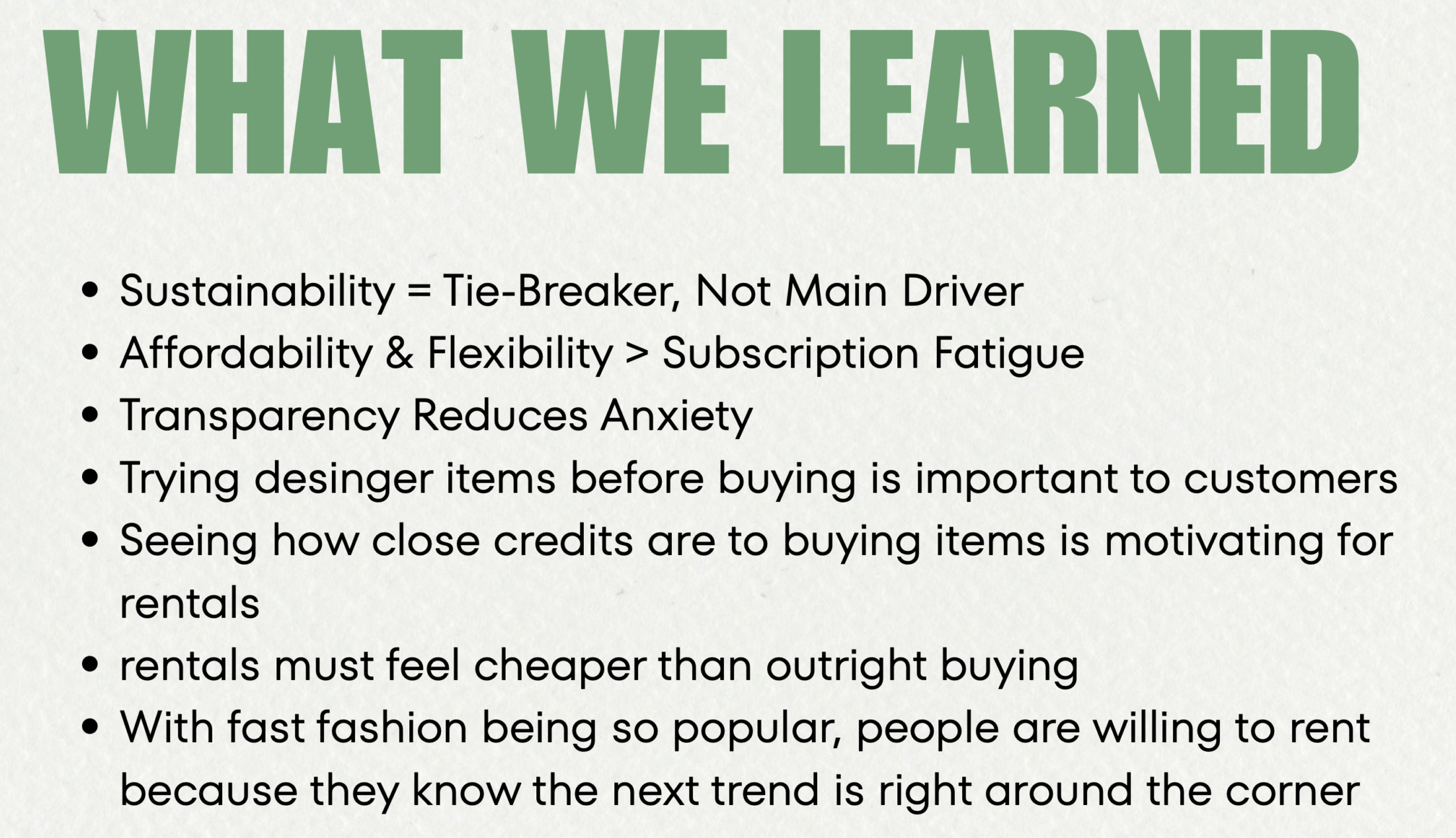
To validate the concept, our team conducted consumer interviews and behavioral research focused on Gen Z and Millennial shoppers. The research revealed several key insights:
• Sustainability influences purchase decisions but is rarely the primary motivator
• Affordability and flexibility are significantly stronger adoption drivers
• Subscription fatigue discourages long-term commitment to rental platforms
• Consumers value transparency around product condition and usage history
• Renting clothing becomes more appealing when it provides a pathway toward ownership.
These insights guided the development of a credit-based rental system that balances sustainability with convenience and cost-effectiveness.
Strategy
Based on the research, we developed a strategy centered around accessibility, flexibility, and digital engagement. The platform uses a pay-as-you-go credit model that allows users to rent clothing, earn credits, and eventually purchase items without committing to expensive subscriptions.
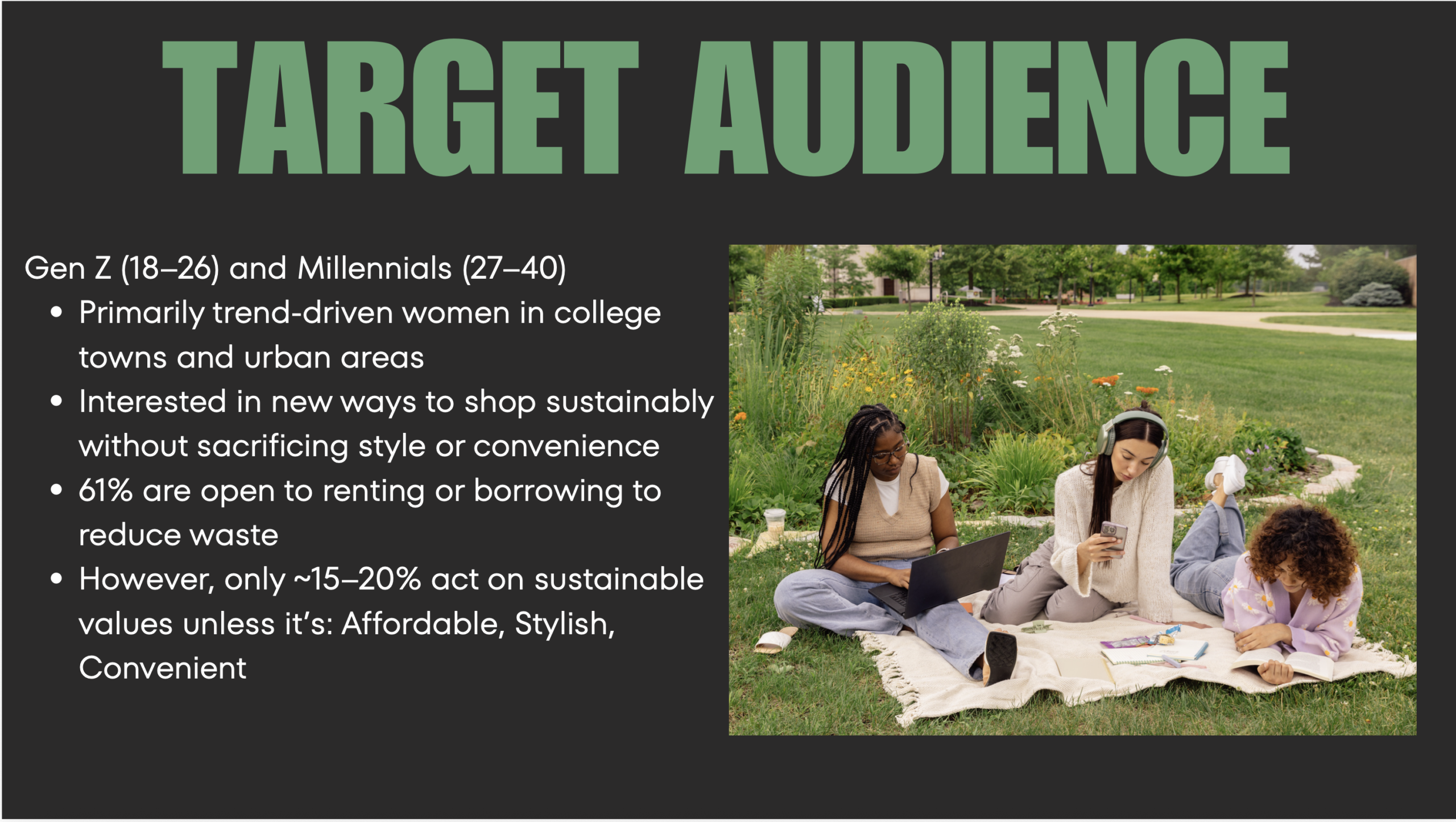
The marketing strategy targeted Gen Z and Millennial consumers—particularly trend-driven college students in urban environments—through a multi-channel approach designed to build awareness and drive early adoption.
Execution
The marketing plan focused on three primary channels:
Influencer Collaborations
Partnering with mid-tier fashion influencers to promote the platform through outfit-of-the-day content, styling videos, and social media engagement.
Campus Pop-Up Activations
Hosting pop-up events at major university campuses to introduce the platform, provide promotional credits, and create shareable brand experiences.
Social Media Marketing
Building brand awareness and engagement through platforms such as TikTok, Instagram, and Pinterest where fashion discovery and trend adoption frequently occur.
Business Model
The platform generates revenue through a rental service fee while maintaining affordability for users. Clothing is purchased at wholesale prices and rented multiple times before eventual resale, allowing each garment to generate revenue across multiple lifecycle stages.
The financial model demonstrated how repeat rentals could drive profitability while supporting sustainable consumption.
Results & Metrics
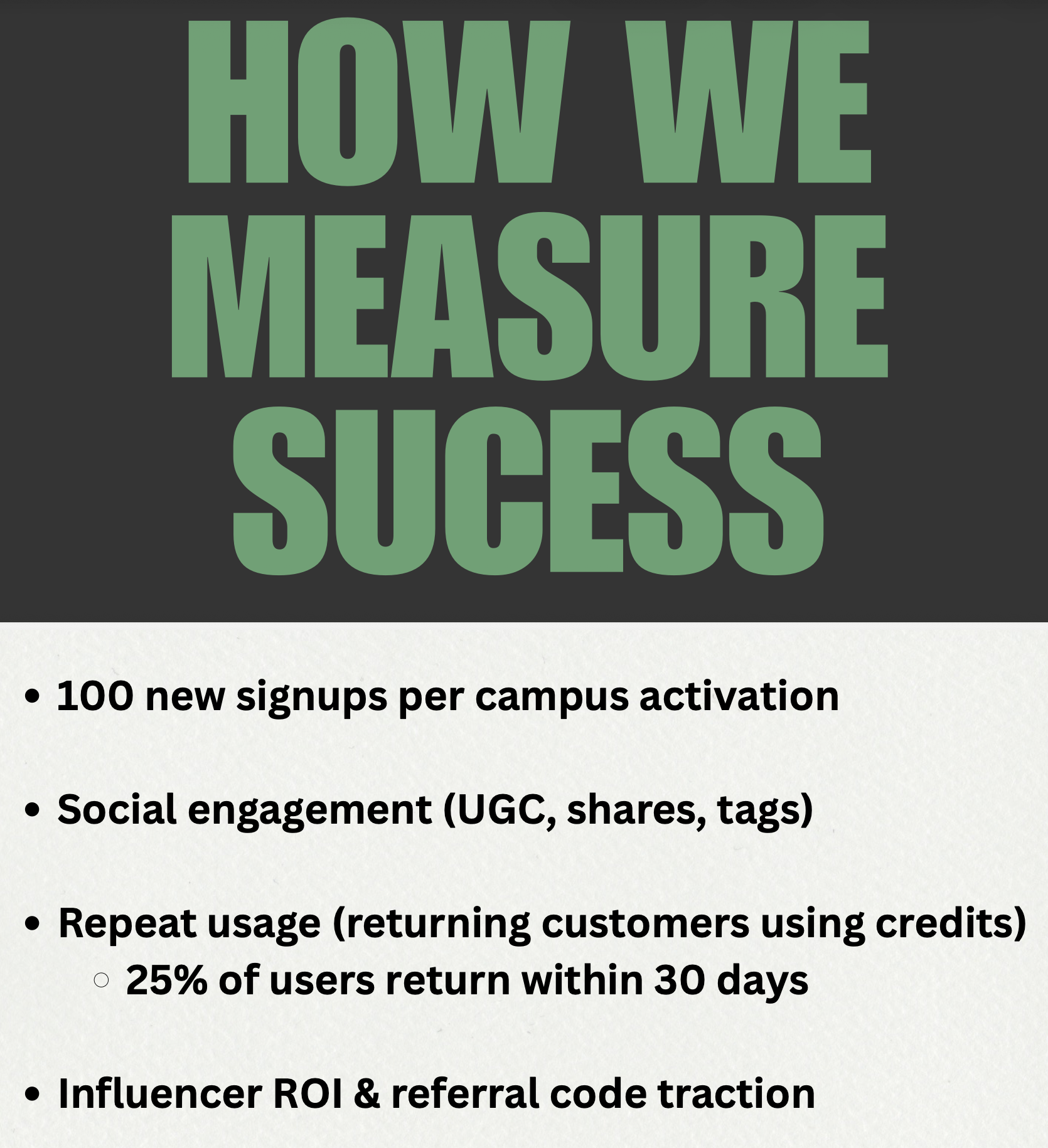
Key success metrics for the platform included:
• User acquisition through campus activations
• Influencer referral engagement and content performance
• Repeat rentals and credit usage
• Conversion rates from rentals to ownership
These metrics were designed to measure both marketing performance and product-market fit during early-stage growth.
Key Takeaways
This project demonstrated how marketing strategy, product design, and sustainability innovation can intersect to create scalable solutions. By grounding the concept in consumer behavior research, the team designed a platform that aligns sustainability goals with realistic purchasing motivations. The experience strengthened my ability to connect consumer insights, marketing strategy, and business modeling to develop solutions that are both impactful and market viable.
LOAN2OWN - Presentations Broken Down
Investor Pitch Presentation
This investor-focused presentation communicates the business model, market opportunity, and financial viability of the Loan2Own circular fashion platform. The pitch highlights the environmental and economic challenges within the fast fashion industry and presents a scalable solution built around a credit-based clothing rental and ownership system. Market research demonstrates the rapid growth of both second-hand and sustainable fashion markets, positioning Loan2Own within a multi-billion-dollar opportunity. The presentation also outlines revenue mechanics, cost structures, marketing acquisition strategies, and projected user growth to illustrate how the platform can achieve profitability while extending the lifecycle of clothing and reducing fashion waste.
Marketing Strategy Presentation
This presentation outlines the integrated marketing strategy developed for Loan2Own, a circular fashion platform designed to reduce clothing waste while making fashion more affordable and accessible. The strategy identifies Gen Z and Millennial consumers—particularly trend-driven college students—as the core audience and leverages their digital behavior to drive adoption. The campaign combines influencer collaborations, campus pop-up activations, and social media engagement to build awareness and convert interest into platform usage. Performance metrics such as user sign-ups, repeat engagement, and influencer referral performance were established to measure campaign success and guide iterative growth strategies.
Lean Canvas – Loan2Own Business Model Development
This presentation outlines the Lean Canvas framework developed to define the business model, market opportunity, and strategic positioning of the Loan2Own circular fashion platform. The analysis identifies the core problem of textile waste and the disconnect between consumers’ sustainability values and their purchasing behavior, framing Loan2Own as a solution that combines short-term clothing rentals with a credit-to-ownership system. The canvas maps key components of the startup model, including target consumer segments, acquisition channels, revenue streams, cost structures, and key performance metrics used to evaluate platform growth. Market research within the presentation highlights the rapid expansion of clothing rental, sustainable fashion, and second-hand apparel markets, reinforcing the long-term viability of the concept. By applying the Lean Canvas methodology, the project translated an environmental challenge into a structured, scalable business model designed to drive both sustainability and consumer adoption.
Minimum Viable Product (MVP) Research Presentation
This presentation documents the research and validation process used to develop the Loan2Own Minimum Viable Product (MVP). Through qualitative user interviews and consumer insight analysis, the team evaluated how potential users perceive clothing rental, ownership incentives, and sustainability messaging. The findings revealed that affordability, flexibility, and transparency were stronger motivators than sustainability alone, guiding the product toward a credit-based, pay-as-you-go model without mandatory subscriptions. These insights informed the platform’s key features—including transparent product histories, a credit accumulation system, and an ownership pathway—ensuring the product design aligned with real consumer behaviors and expectations.