Mastering the Thermostat
Check Out My Work!
Mastering the Thermostat - Influence Analytics
Project Snapshot
Project: Mastering the Thermostat – Behavioral Research on Residential Energy Use
Scope: Behavioral research design, survey development, consumer attitude analysis, and environmental behavior interpretation.
Objective: Understand the psychological and social drivers influencing thermostat behavior in order to identify strategies that encourage more sustainable household energy use.
This project investigated how attitudes, social influence, and perceived behavioral control affect how individuals regulate heating and air conditioning usage in their homes. Using survey research grounded in the Theory of Planned Behavior, the study identified behavioral motivations and barriers influencing sustainable thermostat practices.
Role
Project Lead and Research Director responsible for designing the study, developing the survey instrument, analyzing behavioral data, and presenting research findings.
Focus
Behavioral research and consumer attitude analysis examining how psychological, social, and environmental motivations influence household heating and cooling decisions.
Outcome
Developed a research-driven analysis identifying the behavioral drivers and barriers affecting thermostat usage, revealing a gap between environmental awareness and daily energy practices while proposing strategies to encourage more consistent energy-saving behaviors.
Skills Gained & Demonstrated
Behavioral Research & Survey Design
Consumer Behavior Analysis
Data Interpretation & Insight Development
Environmental Behavior Strategy
Research Communication & Presentation
Mastering the Thermostat - Influence Analytics Case Study
Project Overview
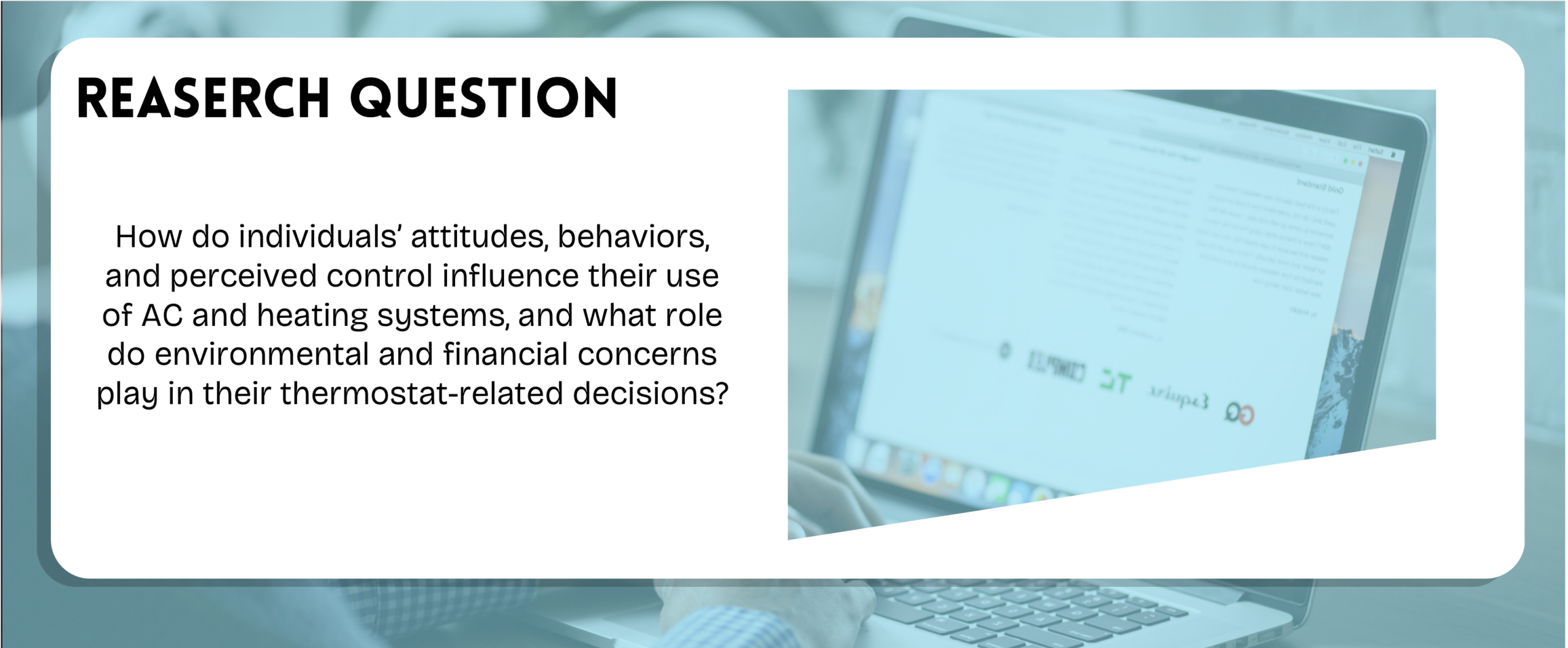
Residential heating and cooling systems represent one of the largest contributors to household energy consumption, particularly in regions experiencing significant seasonal temperature fluctuations. Thermostats act as the primary interface through which individuals regulate indoor climate conditions, making them a key point of influence in residential energy use.
The Mastering the Thermostat project investigates how individuals make thermostat decisions and what psychological, social, and situational factors shape those behaviors. By applying behavioral research methods and analyzing survey responses, the study explores how environmental awareness, financial considerations, and social expectations interact to influence energy-related decision making.
My Role
I independently directed the design and execution of this research project. My responsibilities included:
• Developing the research question and theoretical framework
• Designing and distributing the survey instrument
• Collecting and analyzing behavioral data
• Interpreting survey findings and behavioral trends
• Presenting the research findings through a structured analytical presentation
This role required integrating environmental research, behavioral psychology theory, and data analysis to understand everyday energy behaviors.
The Problem
Although many individuals express concern about climate change and rising energy costs, household behaviors often fail to reflect those intentions. Thermostat usage is a routine activity that can significantly affect both environmental impact and personal utility expenses, yet it frequently occurs automatically without conscious decision-making.
Understanding why individuals adjust—or fail to adjust—their thermostat settings is critical for designing strategies that encourage more sustainable energy practices.
Research & Insights
The study was guided by the Theory of Planned Behavior, which explains how attitudes, social norms, and perceived behavioral control influence behavioral intentions.
Research & Insights:
Attitudes
Survey responses indicated that most participants believed reducing heating and cooling use was environmentally responsible and financially beneficial.
Subjective Norms
Participants frequently reported feeling influenced by roommates, friends, or family members regarding thermostat behavior, particularly in shared living environments.
Perceived Behavioral Control
Although many respondents felt motivated to conserve energy, barriers such as weather conditions, shared housing arrangements, and forgetfulness limited consistent behavior.
Demographic Insights
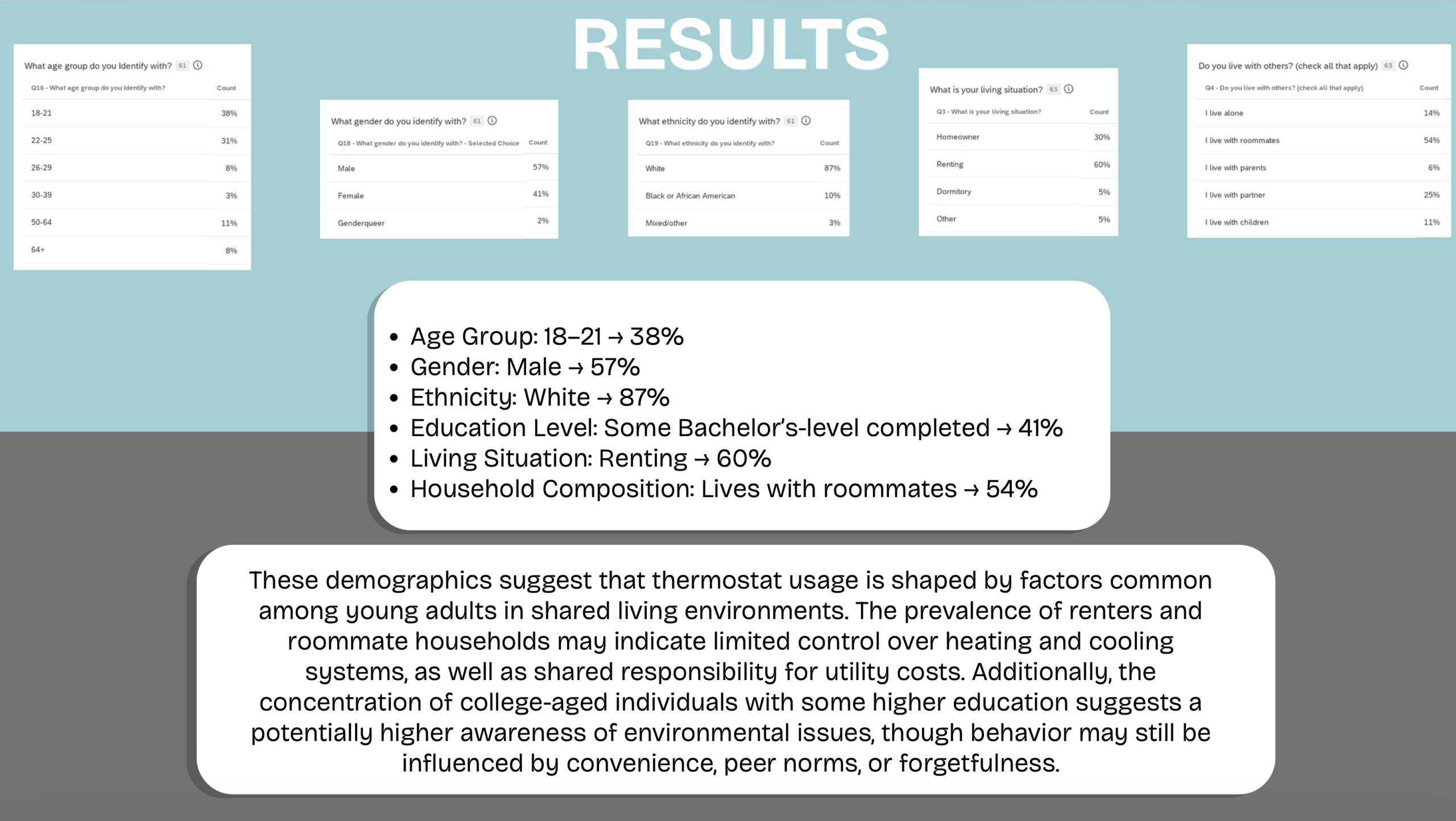
Survey demographics indicated that most respondents were young adults living in shared housing environments, suggesting that thermostat behavior is strongly shaped by social living dynamics and limited individual control over climate systems.
Strategy
The research strategy focused on understanding behavioral decision-making through structured survey analysis.
Three strategic components guided the study:
Behavioral Framework
The Theory of Planned Behavior provided the theoretical lens used to interpret thermostat-related decisions.
Survey-Based Research
A 21-question survey measured attitudes, social influences, and perceived behavioral control related to heating and cooling behavior.
Behavioral Interpretation
Survey results were analyzed to identify patterns in environmental motivation and practical barriers affecting thermostat use.
Execution
The research project was implemented through several phases:
Research Design
A structured survey instrument was developed using Likert-scale questions to measure behavioral attitudes and motivations.
Data Collection
The survey was distributed among university students, friends, and family members to gather a diverse sample of responses.
Data Analysis
Survey responses were analyzed to identify trends related to energy awareness, social influence, and behavioral barriers.
Presentation of Findings
Results were organized into visual charts and presented through a structured research presentation explaining the behavioral drivers of thermostat usage.
Results & Metrics
The study revealed several important behavioral trends:
• Most participants expressed positive attitudes toward reducing energy use
• Environmental and financial motivations were strong behavioral drivers
• Social influence played a significant role in thermostat decisions
• External barriers such as weather, living arrangements, and forgetfulness limited consistent behavior
These findings highlight the gap between environmental intention and everyday action.
Key Takeaways
The project demonstrates how behavioral research can reveal the psychological and social dynamics behind everyday energy decisions. Although individuals generally support energy conservation, practical barriers and social dynamics often interfere with consistent action. Addressing these barriers through behavioral nudges, reminders, and shared accountability systems may significantly improve sustainable thermostat practices.
Mastering the Thermostat - Presentation Broken Down
Mastering the Thermostat: Behavioral Analysis of Residential Energy Use
The “Mastering the Thermostat” presentation examines how individual attitudes, social influences, and perceived behavioral control shape household heating and cooling behaviors. The project applies the Theory of Planned Behavior (TPB) to analyze how environmental awareness, financial considerations, and social expectations influence thermostat-related decisions. Through a structured 21-question survey distributed among students, friends, and family, the study evaluates how individuals perceive energy conservation and how those perceptions translate into everyday behavior. Findings reveal that while most participants express strong intentions to reduce energy consumption due to environmental and financial motivations, practical barriers—such as shared living arrangements, weather conditions, and forgetfulness—often prevent consistent action. The research highlights a behavioral gap between environmental awareness and daily energy practices, emphasizing the need for behavioral interventions, reminders, and shared accountability systems to support more sustainable household energy use.